What happens next?
This is the last question posed by and within Wes Anderson’s 2021 masterwork, “The French Dispatch,” and how trite it may seem to ask what’s next at the end. For a work to get you to think beyond itself is perhaps the lowest bar which one should clear. For a work to simply ask you to do so is almost condescending in both its laziness and brazenness.
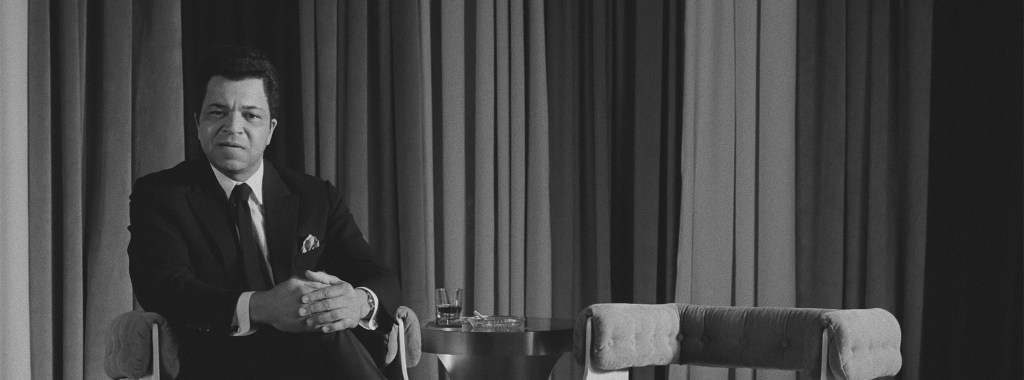
But what if what happens next has already happened? You see, this question is raised in the office of the recently deceased founder and editor-in-chief of The French Dispatch, Arthur Howitzer Jr. (Bill Murray), by Roebuck Wright (Jeffrey Wright) as he begins to pen Howitzer’s obituary both through words his own and vicariously through those belonging to the balance of the Dispatch’s writing staff. Howitzer is there, too, of course—lying sternly on the desk. The question, then, in this case, is not about what’s next—as in, what is next to happen—but rather, what’s next—as in, what next should we include from all that has happened? It’s a question of framing. What must be excised or omitted? What do you keep, and how do you talk about it? Who gets to tell what parts? When? How does each play in the greater consideration of sequencing, of segmenting temporality for maximum impact on the reader.
It’s a room full of writers wanting for an editor in the office of one just passed.
Howitzer, the poor old man, would no doubt have much to say, and surely does. Somewhere. Maybe. Regardless, his words echo—whatever you write, “try to make it sound like you wrote it that way on purpose.”
Intent, or the illusion of intent, is imperative, as I’m sure our director would agree.
So… what happens next?
The third and final of “The French Dispatch’s” proper chapters (which exist alongside an obituary and a prologue) features a story written by Wright, our aforementioned writer, brought to life in interview before a studio audience. He’s the culinary arts writer for The Dispatch; rather unconventionally, this particular narrative takes the form of a caper, albeit one where renowned chef, Nescaffier, features prominently.
At a point midway through his recounting, he’s asked why he chooses to write about food. His initial reaction is one of resistance, insisting that it’s improper to ask a man “why.” Self-reflection is a vice, he says—as one may drink, or smoke, one may self-reflect. Still, it gets his thoughts moving in a direction he’s not fervently-enough opposed to halt, and he proceeds to wander lyrically in search of an answer.
There is a particular sad beauty… well-known to the companionless foreigner as he walks the streets of his adopted preferably moonlit, city. In my case, Ennui, France. I have so often… I have so often shared the day’s glittering discoveries with no one at all. But always, somewhere along the avenue or the boulevard there was a table set for me. A cook, a waiter, a bottle, a glass, a fire. I chose this life. It is the solitary feast that has been very much like a comrade… my great comfort and fortification.
Roebuck Wright, “The French Dispatch”
It’s an oddly affecting moment, as the studio, heretofore portrayed in color photography, is pulled into greyscale (a device used liberally within the picture). It’s a simple frame, but profoundly impacting in its own sense of melancholy. Did he find his answer? I don’t think so, not fully, at least.
To this end, “The French Dispatch” is rather plainly about that which eludes us, us and all the writers, painters, chefs, and filmmakers out there. But what eludes a maestro like Wes Anderson?
Here, he has honed his oft-imitated aesthetic; his panoramas are not simply composed to be many mini-ships in many bottles—they are scenes of life compressed onto the frames of a film reel, harboring at time images so flat as though they’ve been filed discretely away in a dusty cabinet only to be removed and shaken into their pop-up form.
Thinking of everything that he manages to capture so intricately within his Rube Goldberg-esque compositions, it would appear that very little manages to evade his eye, although “The French Dispatch,” indeed, chooses to concern itself with exactly that little which does. It’s a film about trying and failing to define the indefinite. It’s about a series of frescoes painted onto the walls of a prison to the profound dismay of their commissioner, it’s about a young, aspiring martyr amid a revolution who leaves the frontlines for love, it’s about trying explain why you write about food for a living, and about the realization that you can’t quite find the right words to say.
What is a work of art but an act of meditation, of self-reflection?
In “The French Dispatch,” each ship, somehow, sails out of its bottle and onto the waves, all of this only half-heartedly hiding it’s poignance beyond a veil which says, “No crying.”
In a quiet scene which takes place at the end of his story, Wright sits with Howitzer as the two discuss his piece (the one ostensibly about the great chef, Nescaffier—about food). Howitzer, the editor, appreciates the craftsmanship, of course, but is bewildered as to the story’s thesis. He pries one last anecdote from Wright, which the writer claims was excised for adding little to the larger text, in which Nescaffier, still recovering from a recent brush with death, marvels at the taste of the poison which brought him to this precipice. It was something new, unlike anything he’d ever experienced; to a man who believes himself to have experienced nearly everything, such an occasion is inextricable from revelation.
“That’s the best part of the whole thing,” Howitzer remarks, astonished. “That’s the reason for it to be written.”
Wright pauses a beat, turns his cigarette in his hand, and responds, resolutely—
“I couldn’t agree less.”
Grade: A+
“The French Dispatch” is streaming now on HBO Max.

 On the Image
Leave a reply to tmrettig Cancel reply