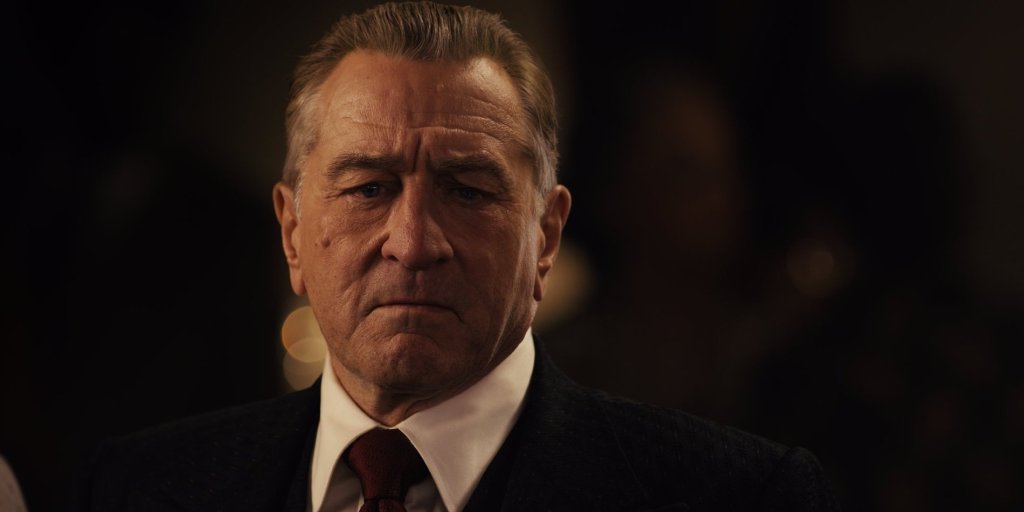
“I heard you paint houses…”
What does it mean to be at the end of a life? As you stand amid knowing exchanges laden in euphemism, delivered in hushed, urgent tones, and capped by solemn nods, you come to realize that a life can end quickly. This unfortunate, unwitting someone—their life uttered away, their existence reduced to the personification of a higher power’s concern—is already dead; you’re just the one tasked with letting them know.
And so you do. You elude the eternal emptiness which stems from an instant—that comprised by a sudden clamor and a flash of pain—and you do so by staying on the right side of the gun. Still, such a relationship with the grave takes its toll—gradually, inexorably—as dehumanizing tendencies spill beyond the confines of your occupation. People respond to you, but only as they need to.
Although it’s tempting to think that you live and die with the heart, the truth is often murkier. As features of the world you recognized silently fade away, as the people you knew—their day-to-day existence having already receded from your focus—flicker out of consciousness for the final time, as the relationships you failed to maintain manifest in stilted exchanges whose yawning disconnects promise little but another growing vacuum that you’re too tired to fill, you come to realize that a life can end slowly.
Martin Scorsese’s sorrowful epic, “The Irishman,” is a towering meditation on age and self-reckoning. Spanning more than a half-century, it follows the story of Frank Sheeran (Robert De Niro), an army veteran, union official, and hitman whose associates and friends included such figures as mob boss Russell Bufalino (Joe Pesci) and Teamster president Jimmy Hoffa (Al Pacino). This is a work with a thematic reach as positively sprawling as its historical one, ranging from the unspeakably steep psychic cost of habitual amorality and vicious indifference, to organized corruption’s persistent creep into and takeover of public service; “The Irishman” is three-and-a-half hours long, and there isn’t a wasted second.
In order to effectively represent decades of Sheeran’s life, the film employs an ambitious digital de-aging process, one that boldly runs the risk of being as uncanny as it is expensive (the picture’s budget surpassed $140 million). Fortunately, here the effects work with a singular efficacy, conjuring the characters of the past as though through memory; these aren’t young men, but rather old men, younger. As its primary principals age seamlessly through the narrative, the film lays bare ego in all of its bluster, tracking its lagging reaction to time’s erosion of the body and—in a broader sense—of its place in the world. Hierarchal orders buoyed by hyper-masculinity are reduced to the futile posturing of scared souls who cling to ephemeral structures until their grasps are reduced to nothing but empty fists clenched in lamenting denial.
At the heart of “The Irishman” is its legendary cast, and it’s difficult to overstate the profundity of their collective impact. Robert De Niro is a marvel, delivering a juggernaut of a performance which stands tall among his greatest roles. He shoulders an emotional weight that we see accrue over Sheeran’s life, culminating in some of the year’s most affecting sequences. Joe Pesci’s turn is one of dramatic restraint, the iconic irascibility of his Tommy DeVito is replaced by a saddened, stoic confidence. He sees with eyes that are quicker to pity than flare; he knows that—for anybody who fails to see the world as he does—a little sympathy might be all that’s left. Al Pacino’s Jimmy Hoffa wrangles and distills a larger-than-life sensibility into a man who conflates losing control of his career with losing control of his life. His attempts to reconcile progress with pride provide some of the film’s brief moments of levity, but even these are underwritten by a constant centering of consequence.
Scorsese, now in the late stages of his professional career, has delivered a definitive cypher through which to read his canon of “gangster movies,” an admittedly-limited tranche of his staggeringly varied filmography, but one which has penetrated and permeated pop culture in a way that few other bodies of work have come close to matching. Pictures like “Goodfellas” (1990) and “The Wolf of Wall Street” (2013) already stand as textual cautions against their own textural excesses, but some critics sought a more explicit condemnation of the lifestyles they depict.
The immutable, despairing isolation at the heart of “The Irishman” leaves no question as to the cost.
Grade: A+
“The Irishman” is in select theaters now and will be available to stream via Netflix on November 27.
 On the Image
Leave a comment